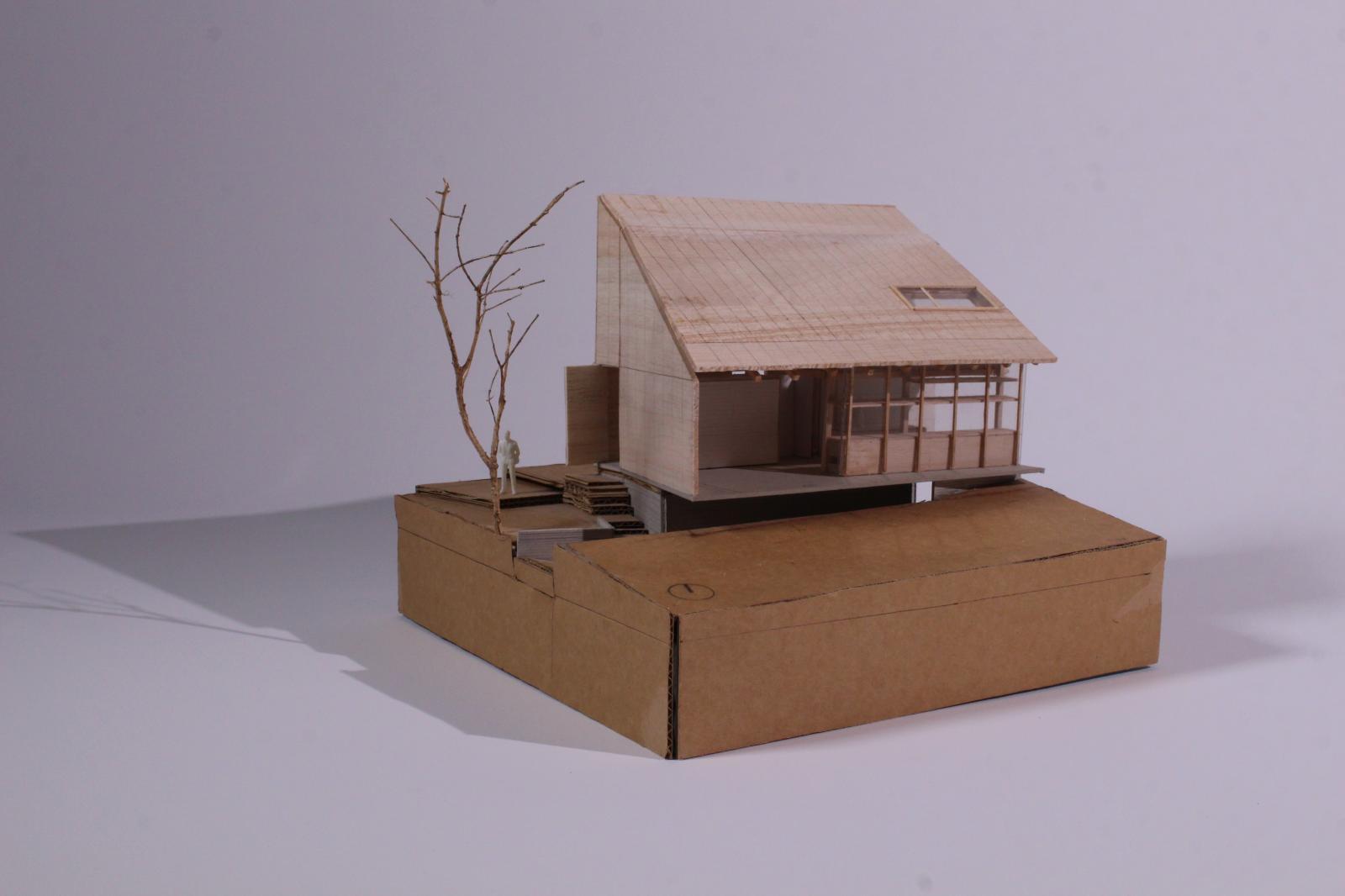
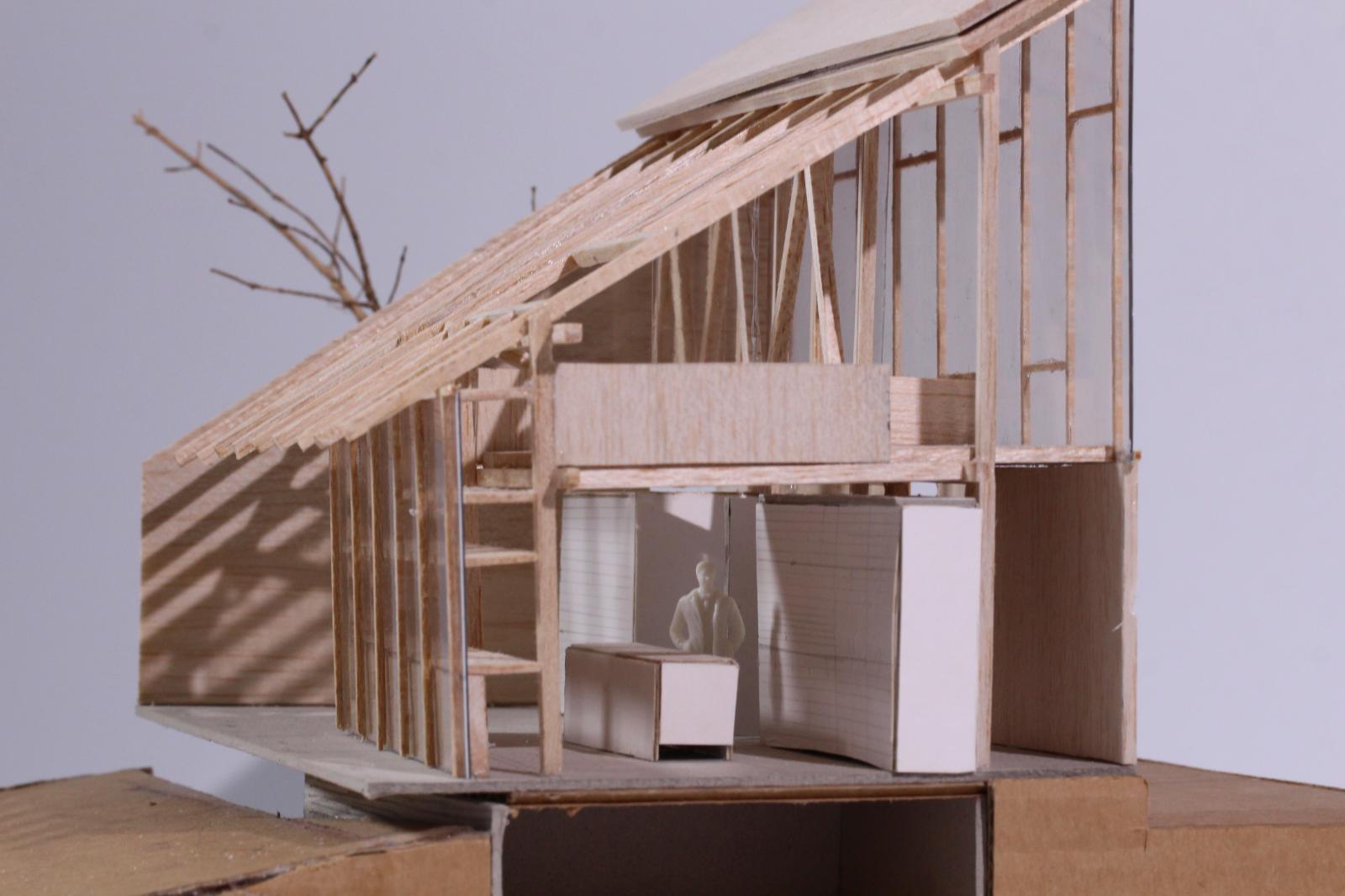
An analogue approach to architectural design centers on a hands-on, iterative process where modelmaking is not simply a finished product but a vital tool for exploration. By working directly with scale, materiality, and spatiality, models allow designers to test and refine spatial sequences, relationships with topography, solar movement, and material interactions. This tangible, physical process offers a deeper understanding of the spaces being envisioned, bridging the gap between conceptual ideas and the built environment.
Modelmaking becomes a crucial complement to other design methods like sketches and drafts. While drawings are essential for illustrating ideas, physical models bring those ideas into three dimensions, offering an embodied experience that helps to better grasp spatial relationships and scale. Through trial and error, architects can refine structure, material choices, and overall design, adjusting as needed before reaching the final implementation.
This approach doesn’t require perfection or advanced digital tools; instead, it values the act of making itself. The simplicity of hand-crafted models becomes an essential methodology for navigating the transition between different scales, from conceptual ideas to the 1:1 built experience. It’s through these hands-on iterations that the design takes shape, allowing for continuous testing and refinement.
Ultimately, this ethos celebrates the importance of learning through making. Modelmaking is more than just a technique—it’s an ongoing process of discovery that helps architects connect their ideas to real-world experiences. It encourages a mindset of experimentation, enabling the design to evolve naturally through physical interaction, offering a more intuitive, dynamic approach to architectural creation.