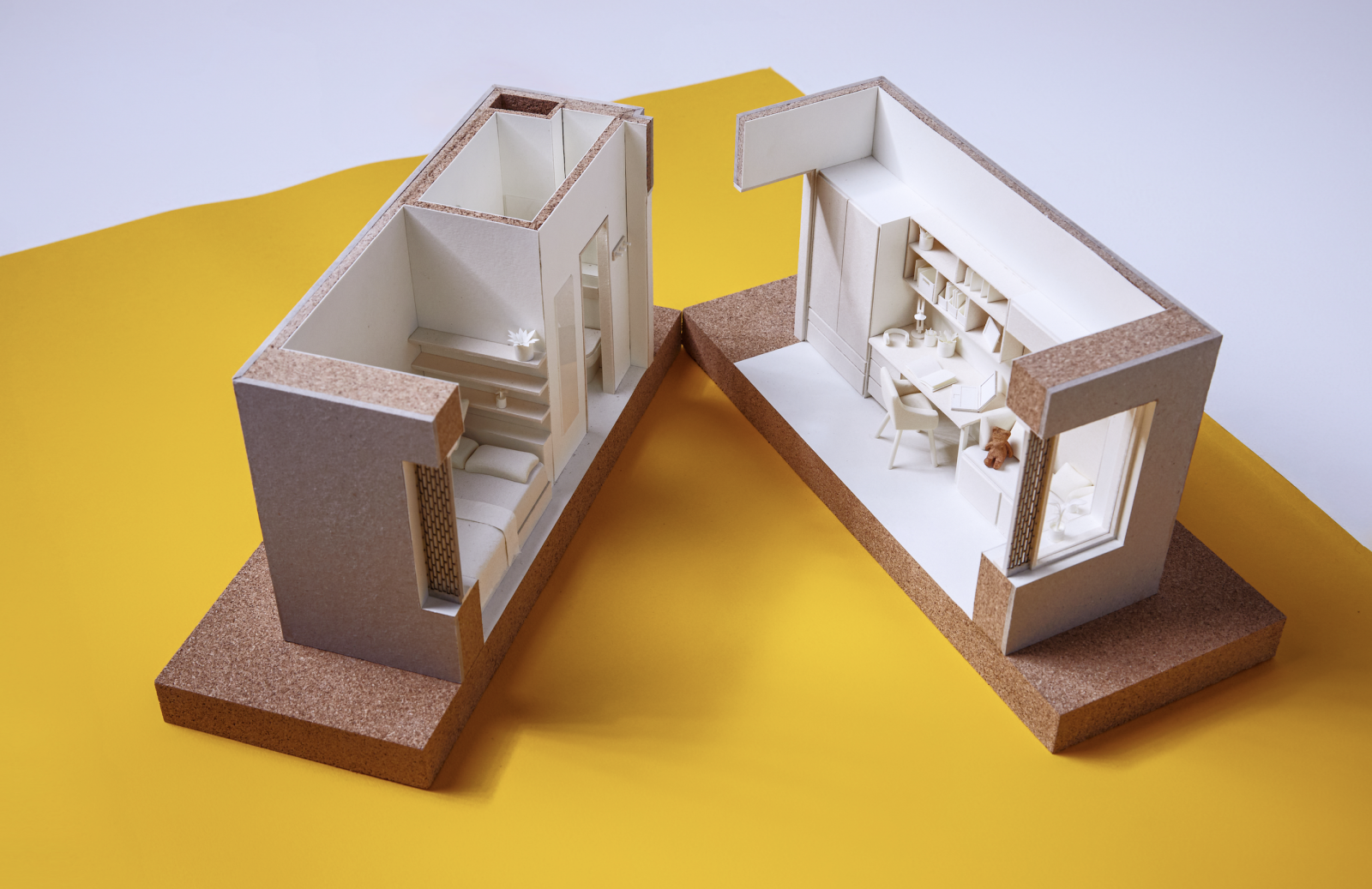
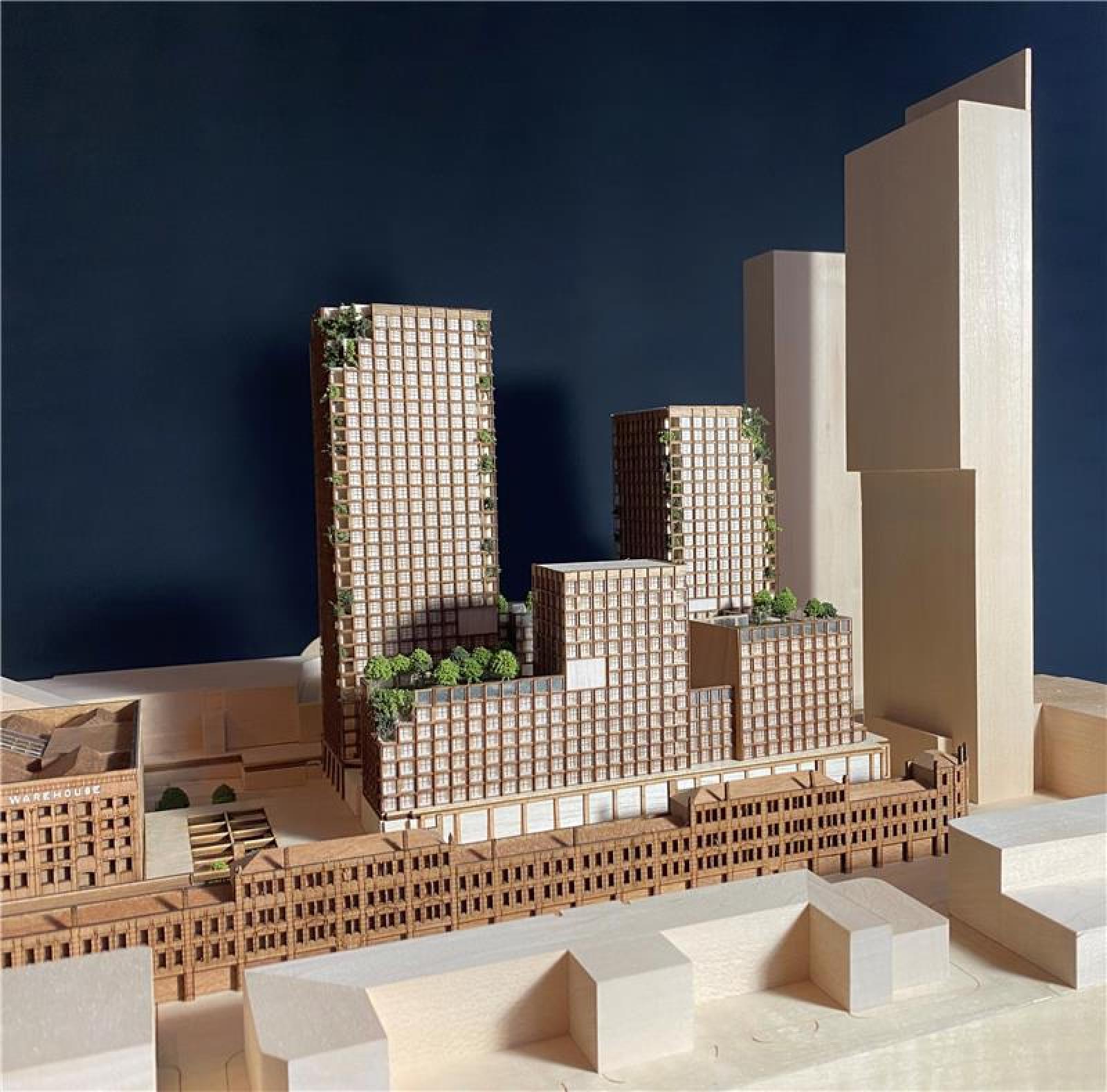
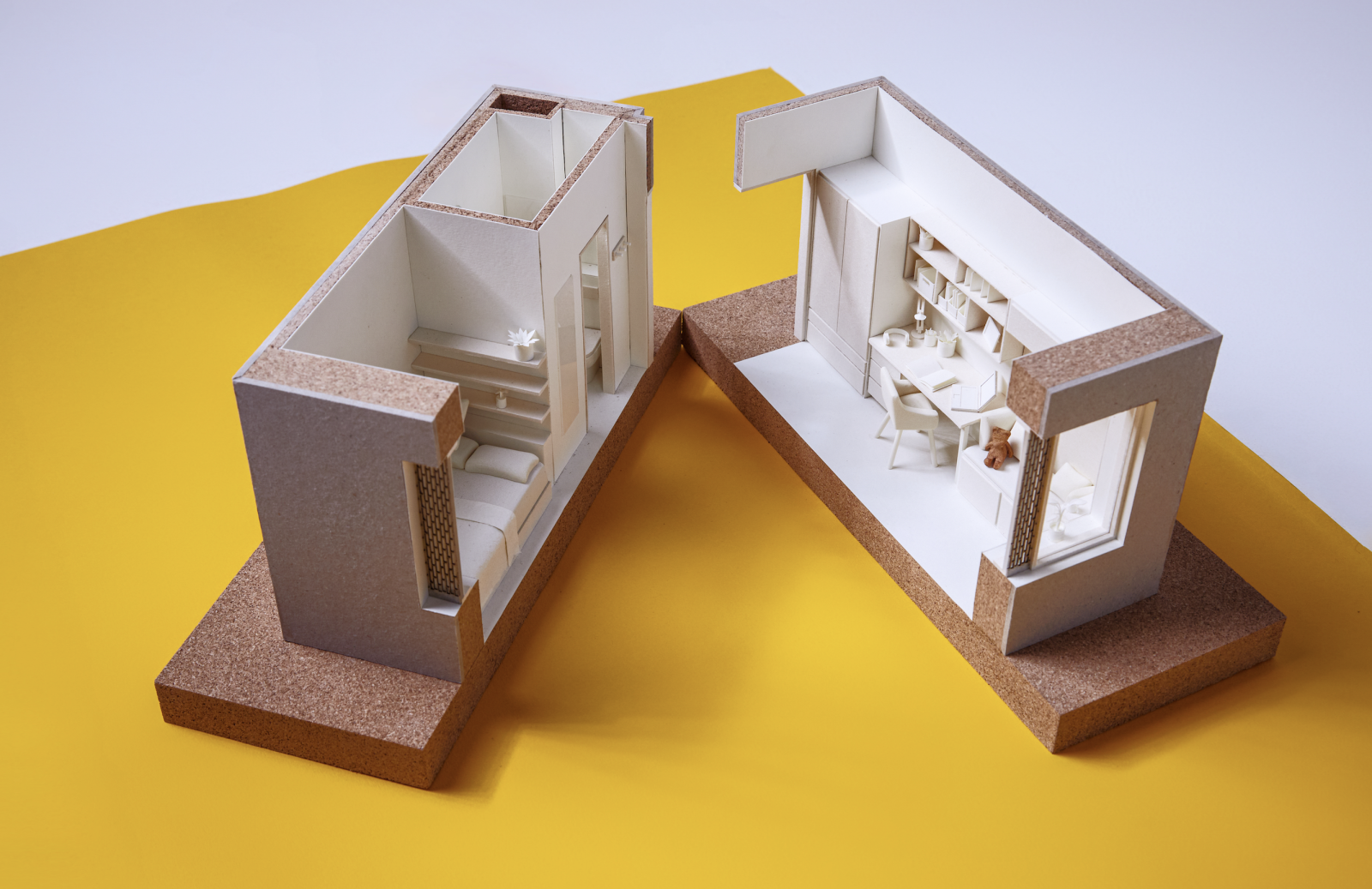
We see physical modelmaking as a fundamental part of our design development process. Models are used throughout - from early conceptual stages to detailed design refinement - and serve, for example, as tools for in-house exploration of ideas, client engagement with the design process, and more effective public consultation and feedback.
Despite advances in digital modelling, we believe physical models offer a unique, tactile experience that enhances architectural thinking in ways that digital tools cannot replicate. The physical act of making remains irreplaceable to us as a medium for exploring design and making decisions – complementing what can be communicated digitally. We incorporate models into almost every project, using different types and scales of models at each stage of design.
Our in-studio model shop allows close collaboration between our model makers and project teams. Together, they explore materials, textures, and construction techniques to produce models that are viable, constructive, informative, and visually compelling. This interaction encourages curiosity and questioning, testing and experimentation, challenge and dialogue, enriching the architecture that emerges from it.
Models are pivotal in translating drawings into tangible physicality, helping us test ideas, understand scale, and communicate spatial qualities and impacts. As communication tools, they foster more meaningful discussions with clients and communities, making potentially complex proposals more accessible and inclusive. We often find they amplify dialogue – shaping design decisions collaboratively.
Ultimately, making matters to us because it brings creativity and design to life. It bridges the gap between the envisioned and the tangible, supporting collective review and shared understanding and vision. In an increasingly digital world, we see the craft of modelmaking not only as a vital design tool but as a skill to be protected and celebrated.
Our models are not static - they are inherently iterative, reflecting, responding to and informing the creative process. We try to keep them all as a record of our design evolution: each one a stepping stone toward the final built form.